Improperly Secured Cargo: What to Do When Debris Falls Off a Truck and Causes a Wreck
Improperly Secured Cargo: What to Do When Debris Falls Off a Truck and Causes a Wreck
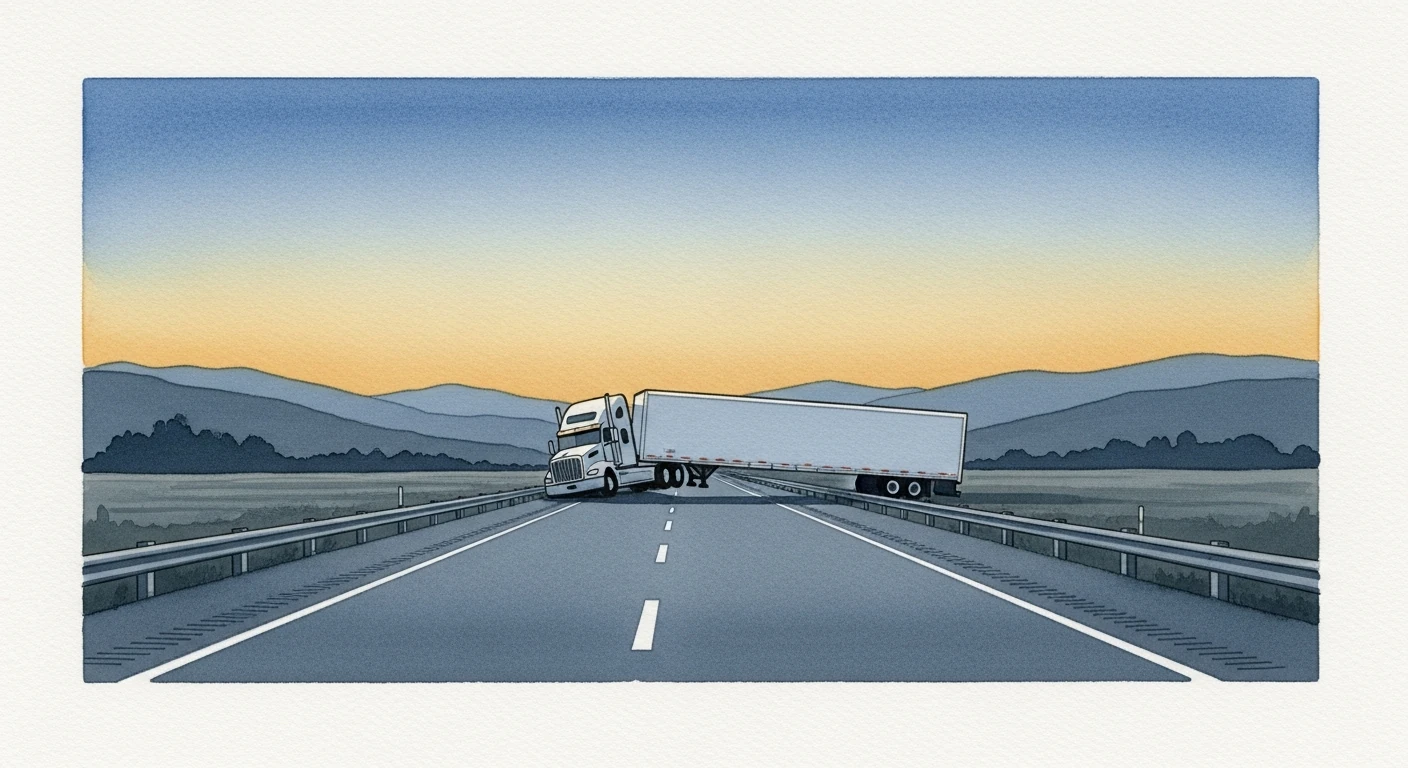
When people think about truck crashes, they often picture rear-end collisions or jackknife wrecks. But in Oregon, another dangerous scenario happens more often than many drivers realize: cargo or debris falls off a truck and causes a chain-reaction crash.
If you are dealing with a falling cargo truck accident Oregon claim, the first legal challenge is usually not just “what happened” but who is responsible. Depending on the facts, liability may involve the truck driver, trucking carrier, loading company, shipper, or more than one party.
This guide explains what to do right away, how fault is analyzed, and which evidence you should protect before it disappears.
In most Oregon cases, liability depends on who controlled securement decisions and inspections. The responsible party may be the driver, carrier, loader, shipper, or several of them together. Early evidence—photos, truck identifiers, cargo paperwork, and electronic logs—often determines whether you can prove fault.
Quick answer: who can be responsible when cargo falls off a truck?
In many Oregon debris-from-truck crashes, responsibility may fall on one or more of these parties:
- Driver (unsafe operation, failure to inspect, failure to secure visible issues)
- Carrier/Motor Carrier (policies, training, supervision, equipment, maintenance)
- Loader (improper securement method, weight distribution, tie-down failures)
- Shipper (incorrect load information, unsafe loading instructions, cargo preparation errors)
The answer is rarely based on one statement at the scene. It is usually based on records: securement logs, bills of lading, inspection data, telematics, photos, and post-crash reconstruction.
What should you do immediately after a falling-cargo crash in Oregon?
1) Prioritize safety and call 911
Move to a safe location if possible. Request medical help and law enforcement. If debris remains in travel lanes, dispatch can coordinate traffic hazard response.
2) Get medical care, even if symptoms seem delayed
Debris-related crashes often involve swerving impacts, side strikes, and secondary collisions. Neck, back, and head symptoms can show up hours later.
3) Report and document
Ask how to obtain the crash report and keep your own documentation from day one.
4) Capture evidence before it vanishes
If you are physically able:
- Photograph debris pieces, tie-down remnants, broken straps/chains, truck markings, and lane positions
- Photograph your vehicle damage before repairs
- Capture nearby business cameras/dashcam leads quickly
- Save witness names and phone numbers
5) Avoid early recorded statements that guess fault
You can report facts without speculating. In cargo cases, early assumptions are often wrong because key records are not yet reviewed.
Why falling-cargo cases are more complex than ordinary car crashes
Commercial cargo operations run under layered safety duties, including federal cargo securement and inspection standards. That means evidence can exist in multiple systems and with multiple businesses.
Key regulatory sources include:
- FMCSA Cargo Securement Rules
- 49 CFR Part 393, Subpart I (Cargo Securement)
- 49 CFR Part 392 (Driving of Commercial Motor Vehicles)
- 49 CFR Part 396 (Inspection, Repair, and Maintenance)
In short: this is not just “did someone drop something.” It is often “which party failed which duty, and what records prove it?”
Identifying the responsible party: driver, carrier, loader, or shipper
1) Driver responsibility
The driver may be liable if evidence shows:
- Unsafe speed or lane decisions for road conditions
- Failure to perform required checks during transit
- Ignoring obvious signs of load shift or loosened securement
Potential evidence:
- Dashcam footage
- ECM/EDR/telematics snapshots
- Driver statements and post-trip records
2) Carrier (trucking company) responsibility
The motor carrier may be liable where company-level systems contributed, such as:
- Inadequate securement training
- Dispatch pressure that discouraged proper inspections
- Poor maintenance of straps, chains, binders, anchor points, or trailer equipment
- Missing or inconsistent safety documentation
Potential evidence:
- Safety manuals and training logs
- Maintenance and inspection history
- Internal dispatch messages
3) Loader responsibility
In many cargo-loss cases, the loading process is the core issue. A loading crew may be responsible if:
- Securement method did not match cargo type
- Tie-down quantity/rating was insufficient
- Weight was unevenly distributed
- Dunnage/blocking/bracing was inadequate
Potential evidence:
- Loading photos/video
- Dock logs
- Warehouse checklist records
4) Shipper responsibility
The shipper may share liability in some cases, including when:
- Cargo description/weight information was inaccurate
- Shipping instructions were unsafe for the actual load
- Packaging or unitization made the load unstable before pickup
Potential evidence:
- Bill of lading and manifest
- Weight tickets and commodity specifications
- Communications between shipper and carrier
Responsibility matrix (quick reference)
| Party | Typical failure point | High-value evidence |
|---|---|---|
| Driver | Missed inspection, unsafe maneuver, ignored warning signs | Dashcam, telematics, statements, citations |
| Carrier | Weak safety systems, poor supervision, equipment neglect | Training files, maintenance logs, dispatch records |
| Loader | Incorrect securement or load balance | Dock checklists, loading photos, securement documentation |
| Shipper | Inaccurate load info or unsafe load prep/instructions | BOL, manifests, weight data, shipper emails/instructions |
Evidence preservation: what matters most in the first days
The biggest mistake in a falling cargo truck accident Oregon case is waiting too long. Data can be overwritten and equipment repaired.
This is true in both an unsecured load accident Oregon claim and a broader road debris truck crash investigation.
Priority evidence list:
- Truck/trailer identification and USDOT numbers
- Cargo debris photos and preserved physical pieces (when safely possible)
- Police crash file and supplemental diagrams
- Vehicle damage photos before repairs
- Witness contact list and statements
- ECM/EDR/telematics and ELD records
- Bills of lading, manifests, weight tickets
- Inspection/maintenance files for securement equipment
- Loading dock records and any available surveillance
For a related evidence guide, see:
Oregon fault rules: why early evidence changes case value
Oregon uses modified comparative fault, which means fault percentages can directly affect recovery. In debris cases, insurers often argue the driver behind “should have avoided it,” even when avoidance time was minimal.
Objective evidence (timing, lane geometry, speed profile, debris pattern, witness accounts) helps counter unsupported fault-shifting.
What if debris hits your car but the truck never stops?
This happens often. If possible, try to capture:
- Company name and USDOT number on the truck/trailer
- Trailer number and plate
- Dashcam footage from your vehicle or nearby vehicles
- Time/location markers for camera canvassing
You may also have relevant coverage through your own policy depending on facts and policy terms. Preserve evidence first, then evaluate coverage paths.
Practical checklist: strengthen your claim without overcomplicating it
- Get medical care immediately and follow up consistently
- Secure the official crash report and claim number
- Back up all photos/videos to cloud storage
- Keep damaged property until documentation is complete
- Track symptoms, appointments, and missed work in a dated log
- Avoid quick settlement decisions before liability is fully investigated
Soft but important: when legal help is useful
Not every crash requires litigation. But cargo-loss cases often involve multiple companies and fast-disappearing records. Getting guidance early can help you preserve the proof needed to evaluate the claim fairly.
If you want Oregon-specific help on next steps, you can review:
- Oregon truck accident legal guidance
- Post-accident checklist
- ELD logbook violations in Oregon truck accidents
- Blind spot No-Zone truck crash liability in Oregon
- Legal Content Team & Editorial Standards
- Contact Johnson Law, P.C.
FAQ: falling cargo truck accident Oregon
Who is liable if cargo falls off a truck in Oregon?
Potentially the driver, carrier, loader, shipper, or multiple parties. Liability depends on securement practices, inspection duties, load preparation, and documentary evidence.
Is the trucking company automatically responsible for falling debris?
Not automatically, but carriers are often central because they control driver training, equipment maintenance, and safety procedures. Records decide the issue.
What evidence is most important after a debris-from-truck crash?
Photos of debris and vehicle damage, witness data, crash report, truck identifiers, and commercial records (securement, loading, maintenance, telematics).
How fast should evidence be preserved?
Immediately. Some electronic and operational records can be overwritten in normal business cycles.
Can I still recover if the insurer says I could have avoided debris?
Possibly, yes. Oregon comparative-fault analysis is fact-specific. Objective reconstruction and timing evidence can be critical.
What if I do not know which company loaded the cargo?
That is common early on. Bills of lading, shipper records, carrier files, and discovery can identify additional responsible parties.
Sources
- FMCSA Cargo Securement Rules
- 49 CFR Part 393, Subpart I
- 49 CFR Part 392
- 49 CFR Part 396
- ODOT TripCheck
- Oregon DMV Accident Reporting
- Oregon State Police Crash Records
This page is general information, not legal advice. Laws and outcomes depend on specific facts.